

Blog
The Story of Iranian Kilim: Weaving Heritage into Modern Design

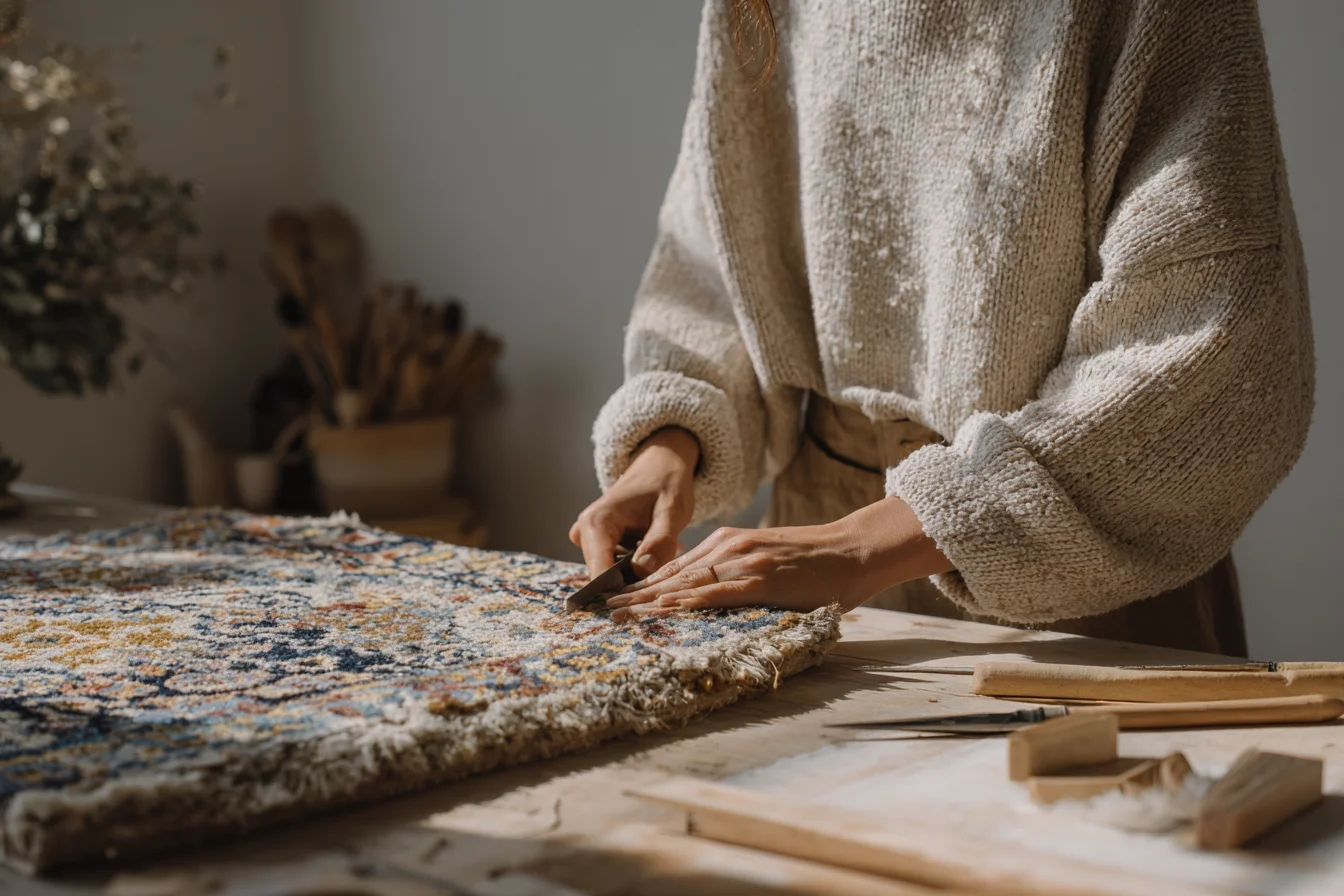
Long before fashion became an industry, it was a language — woven in silence, told through threads.
In the mountains and deserts of Iran, that language took the shape of kilim — a flatwoven tapestry of wool, time, and intention.
Each kilim was more than a carpet. It was a memory of the maker, a geography of colour and patience.
Handwoven by nomadic women, Iranian kilims carried the rhythm of life — the sound of looms echoing with stories of family, land, and love.
No two were ever the same; each pattern held the identity of a tribe, a dream, or a prayer.
At Relique, we see kilim not as something old, but as something alive — a bridge between past and present, between craft and creation.
The Heritage of Kilim
Kilim weaving in Iran dates back over 2,000 years, long before written records of textile trade existed.
Woven without pile, kilims are known for their intricate geometric patterns and the depth of their symbolism — protection, fertility, unity, and journey.
Traditionally, each region of Iran developed its own language of patterns and colours:
the reds of Qashqai, the blues of Shiraz, the earth tones of Baluch, and the tribal diamonds of Kurdistan.
Every line had meaning. Every knot held time.
Made from hand-spun wool and natural dyes, these kilims were durable, functional, and expressive — art forms made to be lived with, not merely admired.
They aged beautifully, softening over years of footsteps and stories.
Today, many of these woven treasures are forgotten, folded away, or discarded as “old.”
But at Relique, we believe the life of a kilim doesn’t end when it leaves the floor.
From Tradition to Transformation
In the hands of our makers, the story continues.
We collect fragments of vintage Iranian kilims — each marked by age, wear, and history — and reimagine them as contemporary pieces: bags, accessories, eyewear frames, and objects that carry both craftsmanship and memory.
Many of the kilims we work with are between 50 and 150 years old — woven by hand, lived with, and passed through generations.
Time has softened them; footsteps have worn their threads.
Some arrive torn or faded, their fibres fragile from years of use, yet still holding incredible strength and soul.
At Relique, we carefully restore and reinforce the surviving sections — preserving every mark of age while giving the fabric a new purpose.
We don’t hide the passage of time; we honour it.
Because each repair, each stitch of restoration, is part of the story we continue to tell: that beauty can endure, and even broken things can live again.
This process is not destruction; it’s continuation.
Every cut is intentional, every seam a conversation with the past.
The worn edges become character, the faded colours become depth.
Through upcycling, these once-forgotten textiles find new meaning — not as decoration, but as design with a soul.
At Relique, a kilim is never just fabric; it’s a story reborn into a modern form.
It’s heritage that moves — across time, across purpose, across generations.
The Beauty of Imperfection
Unlike industrial materials, handwoven textiles carry inconsistencies — small irregularities in pattern or tone that reveal the presence of human hands.
For us, these imperfections are not flaws but fingerprints; reminders that beauty doesn’t come from uniformity, but from intention.
Each Relique piece made with kilim holds traces of its origin: a thread slightly darker from sun exposure, a line woven tighter by a moment of emotion.
They remind us that design can still be personal, emotional, and alive.
Preserving Heritage Through Use
Heritage should not live behind glass; it should live in our daily lives.
By bringing kilim into contemporary design, we honour its makers not through nostalgia, but through evolution.
Every time a kilim becomes a new creation, its story continues — renewed, not replaced.
In a world where fashion often forgets its roots, Relique chooses remembrance.
We don’t extract; we transform.
We don’t imitate tradition; we collaborate with it.
Each piece becomes a small act of preservation — a dialogue between what was and what can be.
Conclusion: Weaving Past Into Future
Kilim is not simply a material — it’s a philosophy woven into threads.
It teaches us that patience can create beauty, and that what is handmade holds something irreplaceable: time, soul, and care.
At Relique, we carry this philosophy forward — turning heritage into living design, weaving memory into matter, and reminding the world that sustainability begins with respect.
Because the past does not need to be left behind.
Sometimes, it just needs to be rewoven.
 Bag
Bag Jewelry
 Eyewear